
How Much Is an Eighth in San Jose? Real 2026 Prices
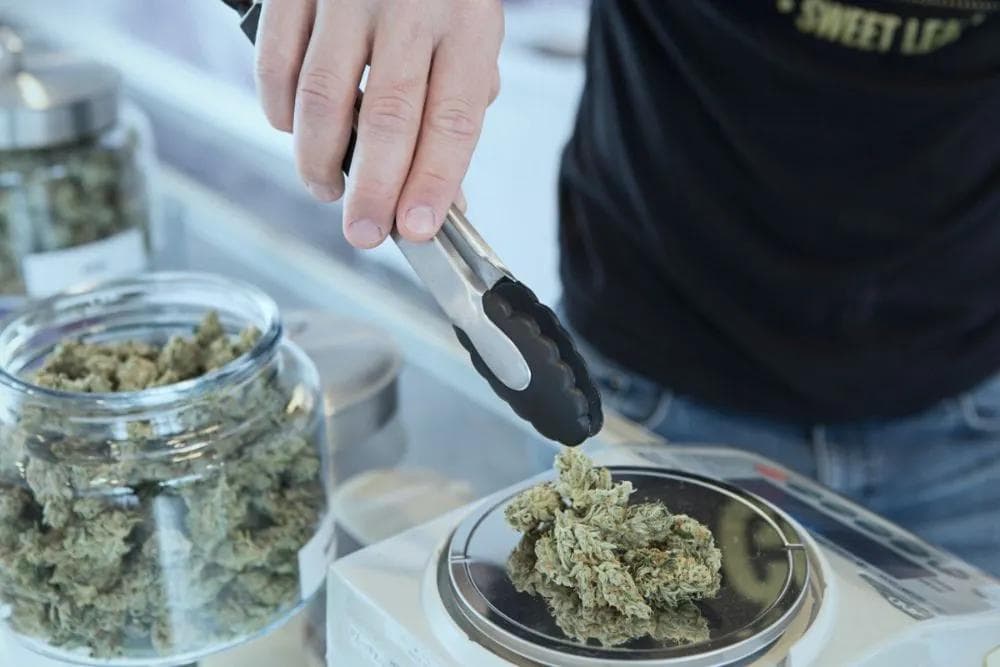
An eighth is 3.5 grams of cannabis. In California the average eighth sells for about $22 before tax, which lands somewhere around $28 to $31 out the door in San Jose once the tax stack is applied. That gap between the shelf price and the register price is the single most confusing thing about buying cannabis here, and it is worth understanding before you compare two stores.
What an eighth actually is
An eighth is one eighth of an ounce. Precisely that works out to 3.5437 grams, and dispensaries package and sell it as 3.5 grams.
| Name | Fraction of an ounce | Exact grams | Sold as |
|---|---|---|---|
| Gram | About 1/28 | 1 g | 1 g |
| Eighth | 1/8 | 3.5437 g | 3.5 g |
| Quarter | 1/4 | 7.0874 g | 7 g |
| Half | 1/2 | 14.1747 g | 14 g |
| Ounce | 1 | 28.3495 g | 28 g |
California adults 21 and over may possess 28.5 grams of non-concentrated cannabis and 8 grams of concentrate. Note that 28.5 is slightly more than a true ounce. The statute is written that way.
The price before tax
Current transaction data from licensed dispensaries puts the California average eighth at $21.67 in July 2026, against a national average of $20.64.
One important qualification, because it explains a lot of confusion: that figure is the average price actually paid at the register, after discounts. It is not the menu price. Average discounting across the market has risen to around 26%, so a $21.67 register average implies menu prices commonly nearer $29 or $30 before anything is taken off.
So "the price of an eighth" can honestly mean two different numbers for the same jar. When you compare stores, compare the same one.
The tax stack, worked through
This is where San Jose gets expensive, and where most explanations get the order wrong. The taxes compound: each one is calculated on a base that already includes the last.
Three layers apply:
| Layer | Rate |
|---|---|
| San Jose cannabis business tax | 10% of gross receipts |
| California cannabis excise tax | 15% |
| Sales tax in San Jose | 10.000% |
Worked through on a $35 product, following the state's own published example:
| Step | Amount |
|---|---|
| Shelf price | $35.00 |
| Local cannabis business tax at 10% | $3.50 |
| Base for the excise tax | $38.50 |
| Excise tax at 15% | $5.78 |
| Base for sales tax (includes the excise) | $44.28 |
| Sales tax at 10% | $4.43 |
| Out the door | $48.71 |
That is 39% on top of the shelf price, not the 35% you would get by adding the three rates together. The compounding is the difference.
One variable changes the answer. If a store folds its local business tax into the shelf price rather than adding it as a line, the multiplier drops to about 26.5% instead of 39%. Both are legal and both happen. It is a genuine reason two stores advertising the same shelf price can charge different totals, and it is why the only comparison that means anything is the number at the end.
What that looks like at the California average
| Shelf price | Out the door in San Jose | |
|---|---|---|
| Local tax added as a line | $21.67 | ~$30.15 |
| Local tax already in the shelf price | $21.67 | ~$27.41 |
Working backwards is often more useful. If you want to spend $40 all-in, you are shopping for a shelf price around $29. For $50 all-in, look at about $36.
A sales tax change most sources have not caught up with
San Jose's sales tax rose to 10.000% on April 1, 2026, after Santa Clara County's Measure A added 0.625% countywide. Plenty of price guides, calculators and older articles still use 9.375%, and every out-the-door figure they produce is therefore too low.
If you are checking someone else's cannabis price math for San Jose, that is the first thing to look at.
Why California costs what it does, and why the usual explanation is wrong
The standard story is that California cannabis is expensive because state taxes are high. In 2026 that no longer holds up.
California's 15% excise is mid-table. Washington charges 37%, Illinois up to 25%, Oregon 17%, Arizona 16%. Yet an eighth in Washington averages about $15.93 and in California $21.67.
Two comparisons make the point sharply:
Washington has the highest cannabis excise in the country and among the cheapest cannabis. Its law requires the excise to be inside the advertised shelf price, so that $15.93 already contains 37% tax. Strip it out and the underlying price is around $11.63, cheaper than Oregon.
New Jersey has almost no percentage excise at all, just a weight-based fee working out to roughly $0.31 on an eighth, about 1% of the price. New Jersey also has the second-highest pre-tax eighth in the country at $30.10.
High tax with cheap cannabis, and almost no tax with expensive cannabis. Excise rates do not explain shelf prices.
What does explain it
Retail access. California has roughly 4.27 retail licences per 100,000 people, and 56% of its cities and counties, 302 of 540, still prohibit cannabis retail entirely. Where storefronts are scarce, retail prices hold up regardless of what farms are getting.
And farms are getting very little. Sonoma County's own tax reviews, drawing on figures reported by local operators, tracked outdoor flower falling from $308 per pound in 2023 to $143 in 2025, and indoor from $1,230 to $240 across the same reviews. At $143 a pound, the flower in an eighth costs somewhere near $1.10 at the farm gate against a shelf price above $21.
That gap is not a tax. It is what sits between a farm and a licensed shelf: testing, distribution, compliance, and a retail layer operating in a market where more than half the state will not permit a shop.
Where prices are heading
Down, slowly, at retail. The average California item price fell from $19.18 to $17.85 over the year to July 2026. Nationally, packaged flower went from $3.84 to $3.62 a gram across the same period. Much of that is heavier discounting rather than lower stickers.
Sharply down at wholesale. The California wholesale index hit its lowest level in more than ten years of publication in January 2026, driven by bulk sungrown flower selling at or below what it cost to produce.
One thing worth knowing about the tax cut. California's excise briefly rose to 19% in July 2025 and was returned to 15% on October 1, 2025. Looking at state excise collections either side of that change, the pre-tax retail base rose while total consumer spending stayed roughly flat, which suggests the reduction was largely absorbed upstream as margin rather than reaching the register. If you were expecting shelf prices to drop by four points that autumn, that is why they did not.
How many eighths can you buy in a day
The purchase limit is set per customer per day, and it binds the store rather than you. A licensed retailer cannot sell one adult-use customer more than 28.5 grams of non-concentrated cannabis, 8 grams of concentrate and 6 immature plants in a single day. Since 28.5 grams is eight eighths with a gram to spare, eight is the practical ceiling in one trip, and it is the same ceiling on a delivery.
The concentrate limit is the one that catches people. It counts the concentrate inside manufactured products, so vape cartridges and edibles eat into the same 8 grams as a jar of rosin. A medicinal patient with a valid physician’s recommendation works to different numbers, 8 ounces of dried flower and 12 immature plants, or whatever the recommendation specifies when it differs. The two sets of limits cannot be added together.
What the label has to tell you
Tier names are marketing. The label is not, because the state sets what has to be on it. On a package of flower the front carries the product identity, the net weight in both metric and US units, and the universal cannabis symbol. The informational panel carries the unique identifier, the name and contact of the cultivator or the licensee who packaged it, the date it was packaged for retail sale, the cannabinoid content and the government warning.
Manufactured products, meaning edibles, vapes and anything processed, add the manufacturer’s name and contact, the full ingredient list in descending order by weight, and a warning that the effects can be delayed up to two hours. A package holding more THC than adult-use rules allow has to say FOR MEDICAL USE ONLY.
Two of those fields are worth your attention when you are judging value. The packaging date is the only published signal of how long a jar has been sitting, and the unique identifier ties that package to the batch whose certificate of analysis you can ask to see. Neither has anything to do with what shelf it was displayed on.
Buying an eighth well in San Jose
Compare the total, not the tile. Add to basket and look at the checkout figure. With discounting near 26% and a tax stack between 26.5% and 39%, the menu price tells you remarkably little.
Bigger formats are much cheaper per gram. Nationally, the gradient runs roughly $8.94 a gram buying single grams, $5.90 a gram buying eighths, and about $1.72 a gram buying an ounce. An ounce costs a little over twice an eighth while containing eight times as much. If you buy regularly and store it properly, that is the largest saving available to you and it has nothing to do with which store you choose.
Watch for tax-inclusive promotions. Some deals are priced so the figure shown is the figure you hand over. Against a 39% stack, that is usually better value than a lower-looking shelf price with tax still to come.
If you hold an MMIC card, you are exempt from sales tax but still pay the excise. In San Jose that is worth about 9.1% off the out-the-door price. The card has an application cost and an annual renewal, so whether it pays for itself depends on how much you actually buy.
Check the certificate of analysis, not the shelf tier. "Top shelf" is a merchandising decision, not a measurement. The lab result on the specific batch is the thing that is actually true about the product in your hand.
Prices at Purple Lotus
Our full menu is live inventory from both licensed San Jose locations, so what you see is genuinely in stock, with lab results on each product page. The flower category carries eighths across every price band, and current promotions are always on the deals page.
If you would rather not make the trip, we deliver across San Jose and 50 or more Bay Area cities seven days a week, with Lotus NOW priority delivery reaching most of San Jose in as little as 45 minutes. Delivery carries a $50 minimum and a $3.99 flat fee, and whoever receives the order needs valid ID showing 21 or over with a name matching the order.