
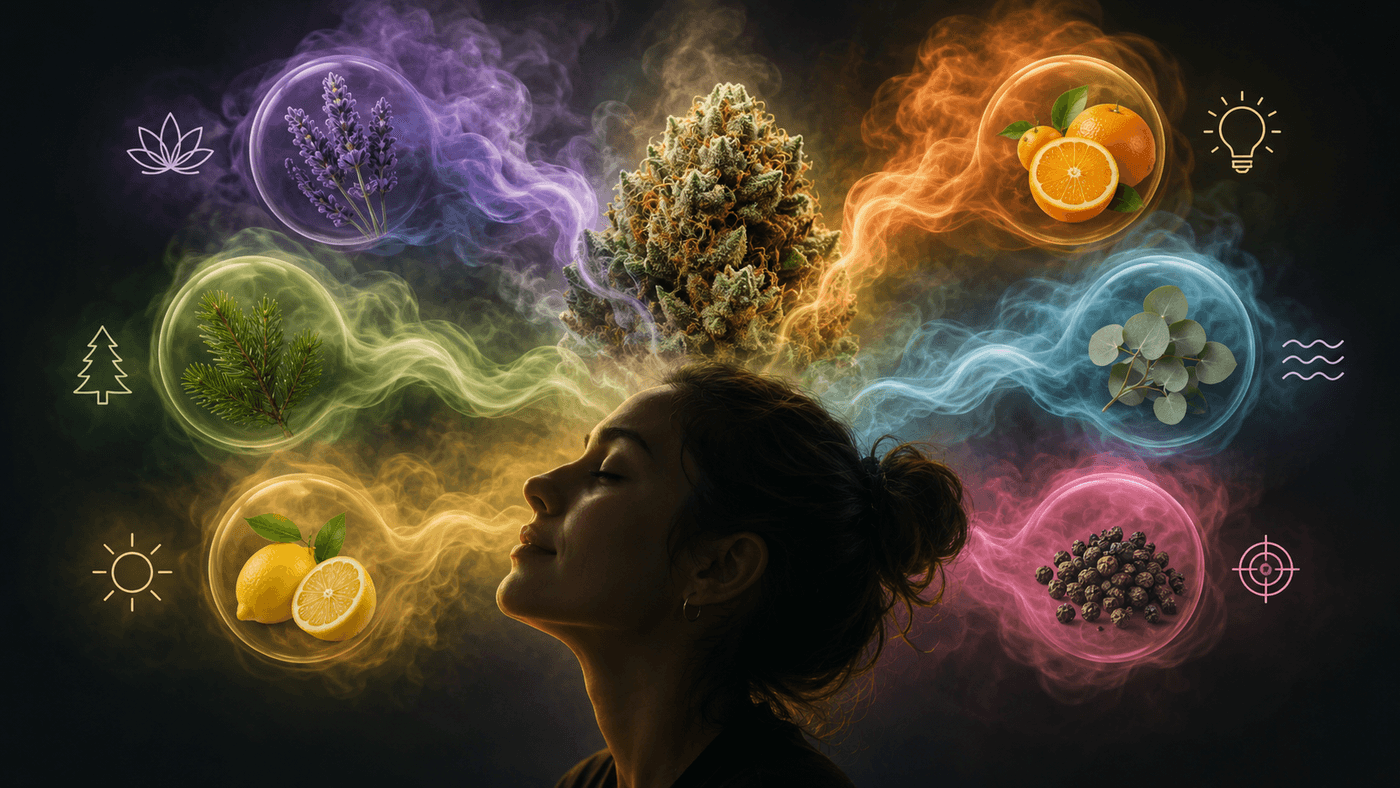
How Terpenes Affect Your High
There's a moment when you try a strain that looks nearly identical to one you've had before, but something about the experience feels completely different.
You might find out that it hits softer, or maybe it wraps you in a kind of calm you weren't expecting.
A lot of people associate this with mystery or batch variation, but the science points to something more specific, known as terpenes.
These aromatic compounds are quietly running the show in ways most people don't understand yet.
Here's what you need to know!
What are Terpenes and How Do They Affect Your High?
Terpenes are the naturally occurring compounds responsible for the distinct smells and flavors found in cannabis and thousands of other plants.
This includes the sharp citrus scent of a lemon peel, the earthy musk of a pine forest, and many more.
In other words, terpenes are the architects of aroma. In cannabis, they don't just make your flower smell good but also actively interact with your body's chemistry and shape the nature of your experience in meaningful ways.
So, how do they affect your high? Let's find out below.
Modulate How Cannabinoids Enter Your Brain
One of the most significant ways terpenes influence your high is by affecting how cannabinoids like THC and CBD are absorbed and processed by your body.
Terpenes such as myrcene are believed to increase the permeability of cell membranes, allowing cannabinoids to cross the blood-brain barrier more efficiently.
This is why strains rich in myrcene are often associated with that heavy, deeply sedating body sensation.
Always remember that it's not purely the THC doing the heavy lifting; myrcene may be amplifying and accelerating the ride.
Interact Directly with Your Neurotransmitters
Apart from their relationship with cannabinoids, terpenes have their own independent interactions with the brain.
For instance, Linalool, the same terpene that gives lavender its signature calming scent, has been shown in research to modulate serotonin receptors and reduce anxiety-related signaling.
Limonene, common in citrusy strains, appears to influence dopamine and serotonin, thus contributing to mood elevation.
Note that these are active participants engaging directly with your neurochemistry.
This is why some cannabis consumers find that certain strains help with stress and mood, while others with higher THC but different terpene profiles leave them feeling anxious or mentally foggy.
Triggers the Entourage Effect
The entourage effect is one of the most discussed concepts in cannabis science, and terpenes are central to understanding it.
This theory suggests that the full spectrum of compounds in the cannabis plant works synergistically to produce effects that are greater and more nuanced than any single compound could achieve alone.
In other words, isolated THC and full-spectrum cannabis with a rich terpene profile are not the same experience.
Terpenes like beta-caryophyllene, which actually bind to CB2, demonstrate how blurred the line can be between these compound categories.
Paying attention to the full terpene profile of a product rather than just the THC content is one of the most practical ways consumers can take control of their experience.
Balances the Effects Between the Head and Body
One of the most important parts of terpenes is how they influence whether your experience feels more cerebral or more physical.
Pinene, for example, is associated with alertness and may even counteract some of the short-term memory impairment associated with THC.
As a result, high-pinene strains are a preferred choice for consumers who want to stay functional and clear-headed.
On the opposite end of the spectrum, terpenes like myrcene and linalool tend to pull the experience toward physical relaxation and sedation.
Terpinolene, found in strains like Dutch Treat and Jack Herer, often contributes to the uplifting and energizing effects.
Determines How Long and How Intensely You Feel Your High
There's emerging evidence suggesting that terpenes play a role in the duration and intensity of the cannabis experience.
Some terpenes appear to inhibit the enzymes responsible for breaking down certain cannabinoids in the body, potentially extending how long their effects linger.
Others may contribute to a faster metabolic clearance, leading to a shorter but sometimes more intense window of effects.
While this area of research is still developing, it aligns with what many experienced consumers already understand.
The reality is that two sessions with different strains, even consumed in the same amount, can last for noticeably different lengths of time in different people.
Paying attention to which terpenes are present can help you determine the kind of experience you're looking for.
Find Your Perfect Experience at Purple Lotus
If you're in the San Jose area and want to put this knowledge to work, Purple Lotus is the place to start.
As one of the most trusted cannabis dispensaries in California, Purple Lotus takes pride in helping customers find products that match what they're looking for.
Our team is well-versed in terpene profiles and can walk you through flower, concentrates, and other products with an eye toward the full chemical picture.
Whether you're chasing deep relaxation after a long week, looking for something to keep you creative and energized, or simply trying to better understand how cannabis works with your body, Purple Lotus is the right destination.
Stop by today and let our knowledgeable staff help you find a strain or product that aligns with your specific needs.